FAQs & Buyer’s Guide
FAQs
What is the expected delivery time?
General delivery times are 3 weeks from placing your order, depending upon your location.
If you need a print by a particular date, please let us know via hello@80srockshots.com or call us on +44 (0)7397 573 606 and we will do our best to sort this out for you.
Do you charge for delivery?
No, all our prices include packaging and delivery.
Where do you ship to?
We ship our prints worldwide.
What types of payment do you accept?
We accept all major credit cards.
Do you do custom sizes?
Yes, please get in touch with your requirements.
Can you frame prints?
The prices displayed are for unframed prints. If you live in the UK we can arrange for your print to be bespoke framed and delivered to your UK address. Please get in touch if you are interested in framing your print and we will happily give you all the information you need.
How should I care for my print?
Keep your print out of direct sunlight and away from unusually hot, cold or damp conditions. For more detailed information please refer to ‘Care, Handling & Archiving’ in the Buyer’s Guide section.
What will it look like on my wall?
To see how a print would look in your home or office please send a JPEG of the wall space where you would like to hang the artwork and we will send you a mock up. Ideally include a measurement (such as an A4 sheet of paper placed in position on the wall) to enable more accurate scaling.
Can you print in black & white?
All of the colour photos in our collection can be converted for reproduction as black & white fine art prints. If you are interested in a black & white print, please contact us and we will be happy to assist you with your request.
Are the colours I see on the website accurate?
We have made every effort to present our images as accurately as possible. However, due to variations in monitor calibrations and display settings, we cannot guarantee the accuracy of how the image appears on your screen. Online viewing will always fall short of the impact that a high-quality fine art print provides.
What is archival printing?
Archival prints are museum-quality pieces that use refined particles of pigment to create beautiful, high-resolution finished artwork. As its name suggests, this method of printing creates artwork designed to last a long time.
If displayed under normal lighting conditions and the normal precautions are taken, a print can last approximately 200 years in a photo album, 80-years on display behind glass and 50-years without the glass.
Buyer’s Guide
Whether it’s your first fine art print purchase, you’re looking to add to your existing collection, you’re buying that extra special gift or maybe just because it’s an ‘I-was-there’ memory, I want your 80srockshots experience to leave you happy and excited by your purchase.
Collecting fine art photography doesn’t have to be intimidating – I will always be here to answer any questions or concerns – but first a bit of background:
Before the introduction of digital sensors, I shot on colour transparency film and B/W negative film – both with great contrast producing sharp images. Today’s sensors, although having a large latitude, need to be post produced to get the best out of the image.
I had no control in terms of software then, so just shot and hoped that I got a cracker (no instant review). Film ISO/ASA was maxed at 400 and grain increased exponentially as one used a different film or at times pushed the processing time to give an extra stop. Had to use fast glass to get the result.
Today all these have now been scanned at high resolution, before being retouched to remove the detritus that abounded in the processing (crap in the dryers etc) – back in the day the tranni was what we got!
Limited Edition
All our images are limited to 50 prints.
Each artwork is accompanied by a certificate of authenticity showing the date and location of the shot, each carrying its own edition number and hand-signed by Nik.
Print Sizes
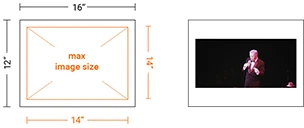
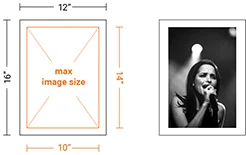
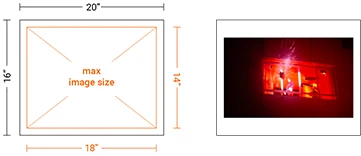
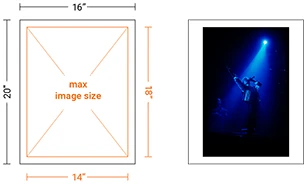
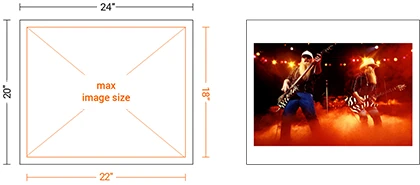
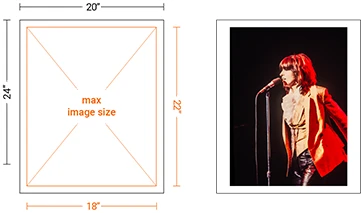
We offer three sizes for landscape or portrait prints: Standard, Large or Extra Large.
Portrait prints:
Standard
Large
Extra Large
Landscape prints:
Standard
Large
Extra Large
The maximum printed image area (w or h) is 1” smaller than the actual paper size to provide space for matting / framing and to accommodate Nik’s signature.
When viewed full screen, all our images are displayed with their relevant crop applied proportionally, where the largest dimension (width or height) will match the maximum image area of your chosen paper size.
Custom Print Sizes
Custom print sizes or larger sizes than those available on this site may be available by special order. Please contact us for quotes on specific images, and we’ll help you find the best print for your space.
Print Production
Framing
We do not provide framing because we believe each image should be carefully assessed to ensure the framing is perfectly suited to its environment.
To ensure the longest possible lifespan for your print, we recommend framing it with UV-filtering glass or plexiglass. Use acid-free museum board for both the matting and backing. We suggest a minimum mat width of 3 inches (8 cm) on all sides, with an additional 20% at the bottom for a balanced look.
We suggest using thin black aluminium frames for our prints. If you select a different frame, ensure it is sturdy, and if it’s made of wood, verify that it is free from stains or dyes that could release harmful chemicals and damage your print. Avoid mounting your print with adhesives, as they can compromise its longevity.
Display & Lighting
Art has the power to transform. It elevates and enriches the spaces where we live and work. Take time to thoughtfully place your art to maximise its impact and enjoyment – say goodbye to bare walls!
Proper lighting is key to displaying your art at its best. We recommend using LED lighting, as it closely mimics natural light and is ideal for showcasing most artworks. LED bulbs generate minimal heat and release almost no harmful ultraviolet radiation, making them an excellent choice for illuminating valuable pieces.
Care, Handling & Archiving
Care & Handling
To preserve its pristine condition for years to come, it’s important to follow a few key guidelines when handling, framing, or storing your fine art print.
Photographs are vulnerable to damage, but with a few simple precautions, your prints can be enjoyed for many generations. Handling them with the same care a museum curator would use is the best way to preserve both their condition and their value.
- Handle your print by the edges with clean, dry hands or, if possible, wear white cotton art-handling gloves
- Store prints flat, with acid-free tissue paper between them, and keep them away from anything that could damage their surface
- Store your prints in a stable environment, avoiding fluctuations in temperature or humidity
- Always frame your prints using archival-quality materials and methods
- Avoid hanging or displaying your prints in direct sunlight, strong indirect daylight, or under fluorescent lighting
- Ensure your prints are covered for damage or loss by including them in your renter’s or homeowner’s insurance policy.
Archiving
The ideal storage conditions for most photographs are a temperature of 20°C and a relative humidity between 30-40%.
Avoid storing fine art prints in attics or basements.
Store all photographic materials in enclosures that shield them from dust, light, and provide physical support. We recommend using chemically stable, acid-free plastic or paper enclosures.
Prints should be protected from harmful light by storing them in an acid-free, durable, photo-safe box.